

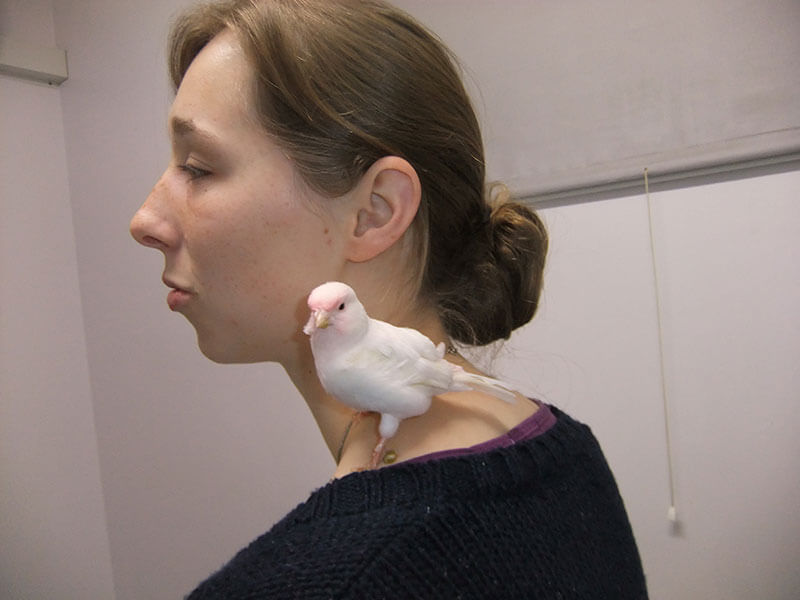
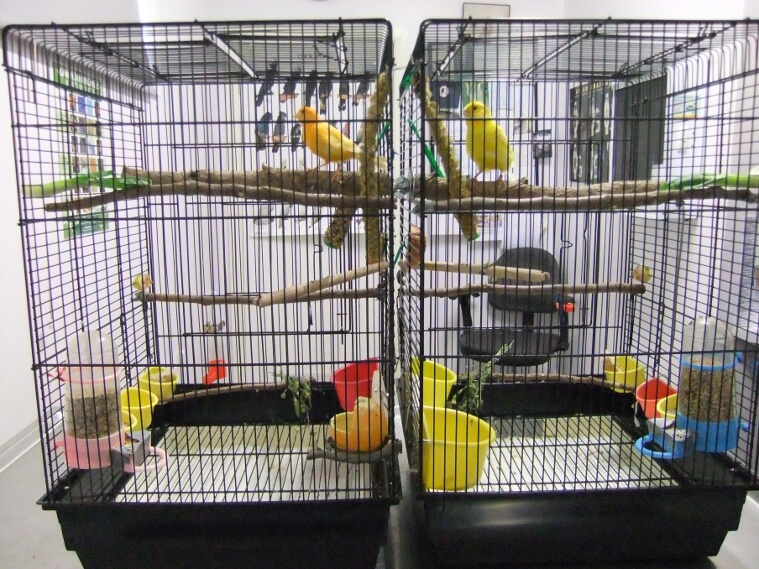
Canaries often prefer being in their own cages, side by side !
At Melbourne Bird vet
Canaries (Serinus canaria) are derived from a finch species native to the Canary Islands that was introduced into Europe in the early sixteenth century. There are many types and colour varieties. Average life expectancy is about nine years.
These little 20 gram "balls of feather" are much more than "little yellow birds that sit in a cage and sing." They are interactive with unique, individual personalities and are wonderful companions.
Housing and husbandry ( Canary Vet)
Canaries can be kept in a large rectangular cage or aviary
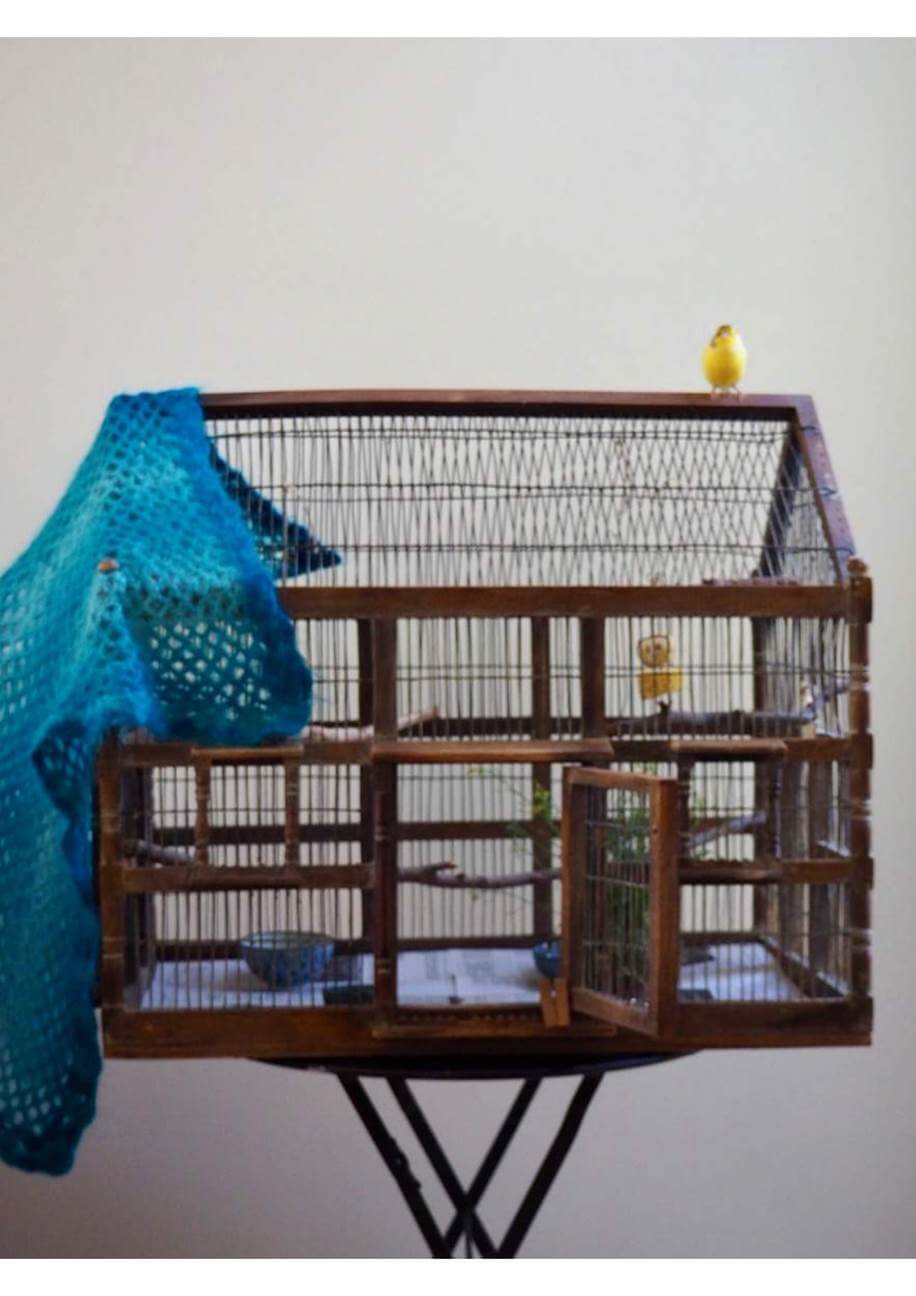
canary living in a large , secure , ideal cage with an open door policy at supervised times - Larry flies around every day - what a lucky bird ! ( the the Melbourne canary vet)
- Perches should be natural wood of varied diameters and regularly replaced. Place at opposite ends of the cage to encourage flight. Avoid sandpaper on perches.
- Regularly a bird bath in the cage. Bathing is both necessary and pleasurable for your bird. Some bird baths are designed to fit in the cage door and are not messy.
- Some canaries enjoy having a swing, but do not place the swing anywhere that it might stop free flying between perches.
- Leafy native Australian tree branches, grasses & greenery should be put into the cage for behavioural enrichment & beak care.
- Canaries to not tend to play as much with toys as the parrots, but there are some types they enjoy. See our range. Change toys regularly.
- Do not use cotton wool or fine fibres for nesting material or in the cage as canaries are prone to getting such fibres caught around their toes.
- Birds are not helicopters, to allow flight have a wide cage rather than a tall one. A reasonably sized rectangular cage is suitable. Narrow round cages are NOT recommended.
- The canary cage should be away from draughts and direct sunlight.
- Many canaries are happy being alone in their cage without a companion. In the wild they are solitary birds and do not live in a flock. Pairs get together for the breeding season only. But canaries are still very sociable and bond with their owners. The daily feeding routine and talking to the bird each time you pass the cage is important. Male birds respond to the attention by singing for large parts of the day. Canaries but they can also be kept in pairs or groups provided the cage or aviary is large enough. Cages next to each other each housing a canary is another option.
- When babies hatch they need special soft food for the hen bird to feed them. It is usually referred to as egg food as in its simplest form it comprises hard boiled eggs and breadcrumbs. Sprouted seed is also a useful addition while the parents are raising their clutch. The adult birds will still require seed and greens for their own needs.
An example of Larry's canary diet - for a canary owner wanting to give optimal care the best canary diet
SPROUTED MIX USING WHOLE, ORGANIC, NON-IRRADIATED SEEDS, GRAINS
AND LEGUMES
Inspired by information and bird seed mixes found at: sprout
people.org
For the canary owner wanting the best canary diet - this canary chop is brilliant - and recommended by the bird vets.
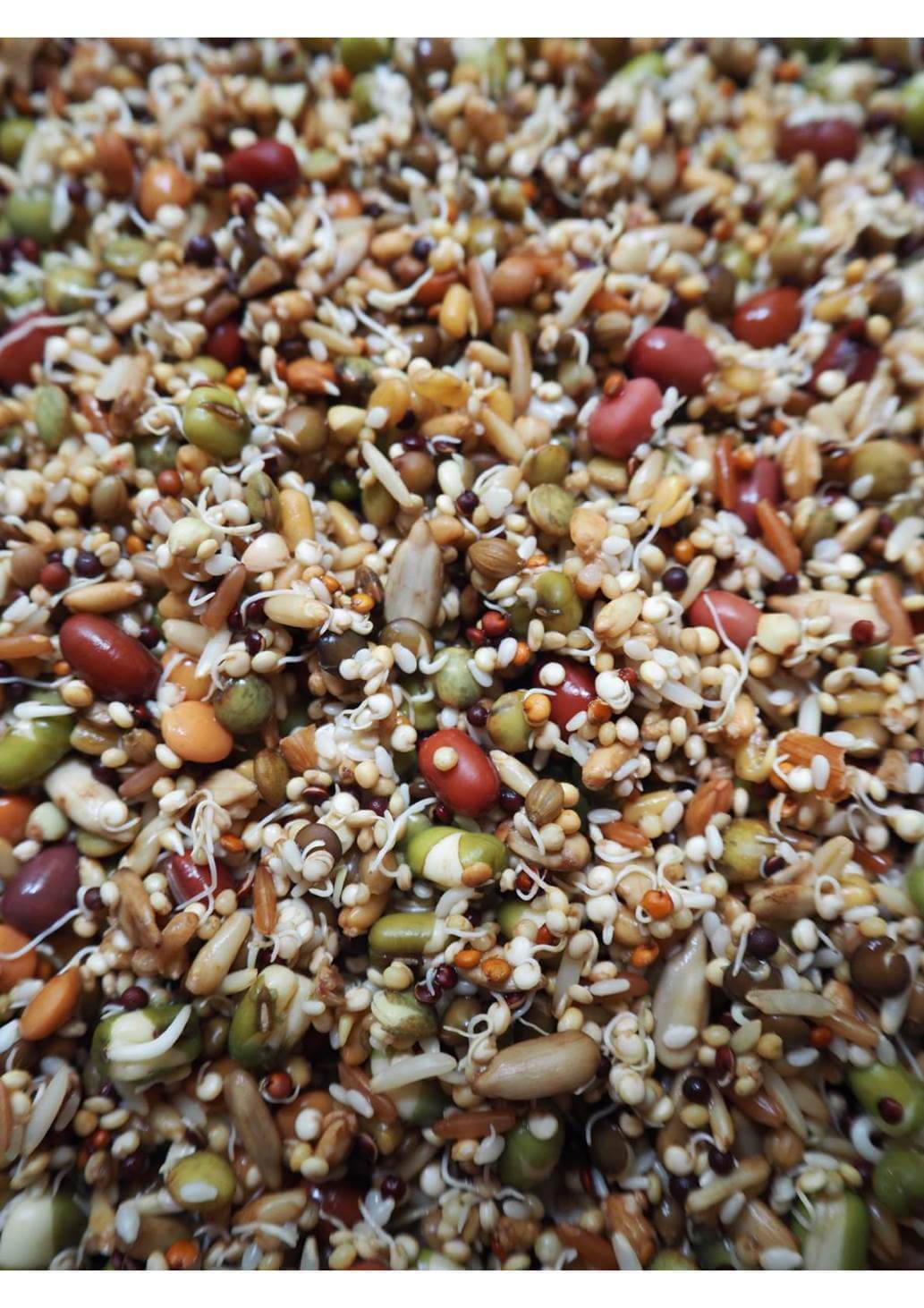
At Bird vet Melbouirne
FILTERED WATER for sprouting and drinking
SEEDS for a Canary diet - Canary Vet
Sunflower x 1 handful
Coriander x 1 handful
Fenugreek x 1 handful
Sesame x 1 handful (generous)
Mustard - yellow or brown x 1 handful each
Buckwheat x 1 handful
Millet x 1 handful
Quinoa x 3 handfuls
GRAINS (from the canary avian vet0
Brown basmati rice x 1 handful
Wild red rice x 1 handful
Spelt & or wheat - whatever I have on hand x 1 handful
Oat groats x 1 handful
LEGUMES ( Larry's canary Vet)
Adzuki beans x 1 handful
Mung beans x 1 handful
Green lentils x 1 handful
Brown lentils x 1 handful
Black lentils x 1 handful
To make the sprout mix you need a 1 litre jar with a flip top lid.
This quantity will be enough to approximately 1/4 fill your jar.
Cover the mix with plenty of water (fill the jar to 1/2 full) and
leave it to soak for 24 hours.
For more information go to:
sproutpeople.org and see under just for pets / bird seed mixes
For complete sprouting instructions go to:
https://sproutpeople.org/growing-sprouts/sprouting-instructions/
OTHER FOODS - SPRINKLED OVER THE SPROUTED MIX (Canary vet melbourne)
Plain egg ‘omelette’ finely chopped - alternate days & every day
when moulting (store in freezer).
Eggshell - oven dried on high heat then crushed finely
Bee pollen
Flax seed - not sprouted as it becomes slimy when soaked and sticks
everything together.
A little plain cooked rice as an occasional treat - only very fresh
/ stored in the fridge as it’s prone to mould.
(To avoid it sitting around, I don’t offer more than he will eat
fairly quickly, approx 1/2 teaspoon).
Nuts - very finely chopped almonds, cashews, brazils (occasionally)
FRUIT & VEG (veterinarian for Canaries)
Corn on the cob
Banana - skin on, ends or slices
Kale - small tender leaves - (little scraps)
Celery tops (store them immersed in water in the fridge)
Oddly, (or not) Larry reliably favours yellow coloured foods as
treats…
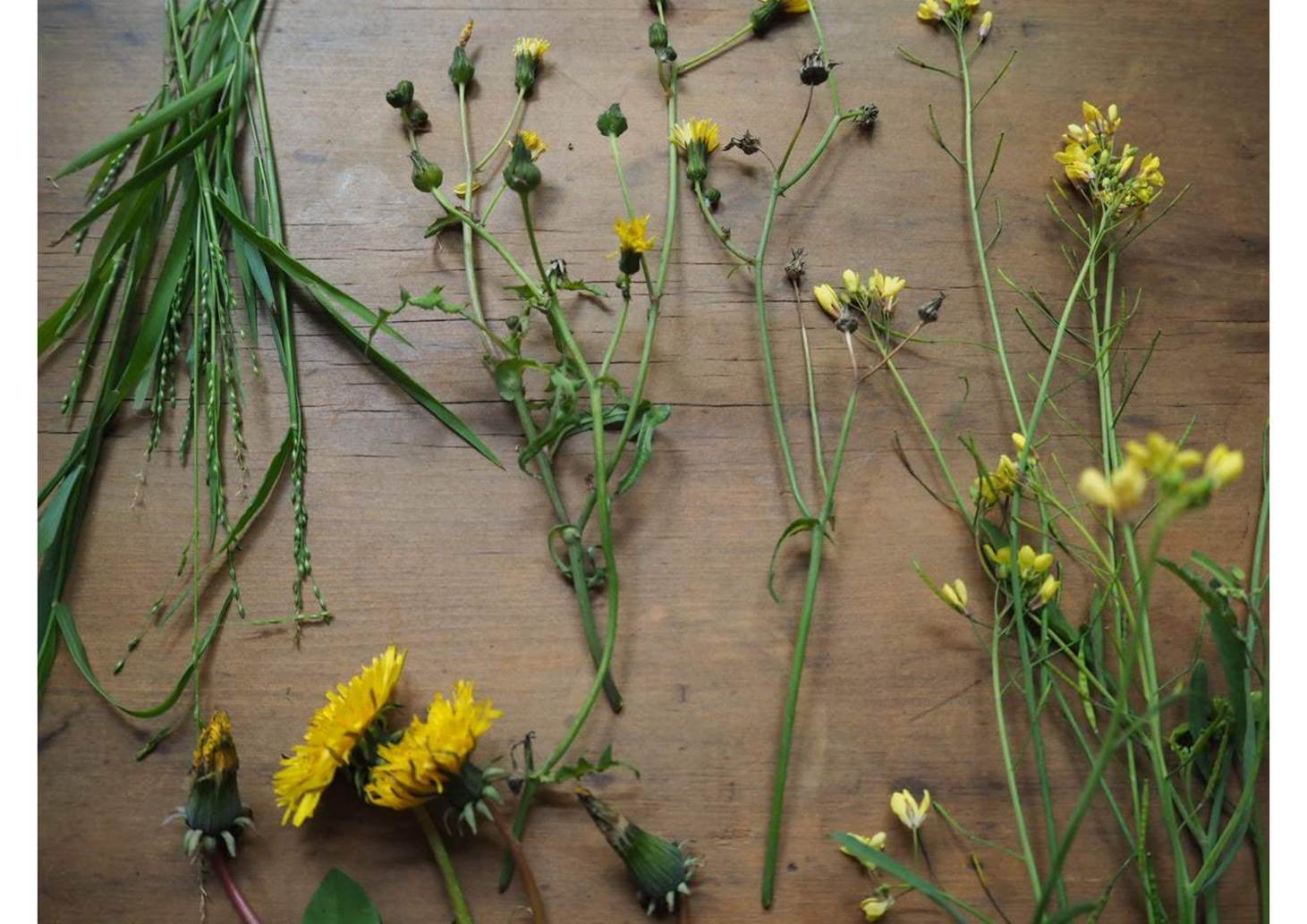
WILD WEEDS & GRASSES
NB Not from council sprayed areas - I try to forage near a creek or
from my own back yard or neighbouring
gardens
Yellow flowers (more yellow!)
Thistle
Grass seeds
Dandelion NB keep the root on and wash it - it keeps better & he
enjoys the root as much as the leaves &
flowers.
Nasturtium flowers and leaves (Robirda suggests them but I’ve only
offered a few time and not sure if he’s
eaten any).
LARRY’S TOP ‘BEELINE’ FAVOURITES - these usually elicit little hops
of excitement and he doesn't waste
any time getting down to the important business of devouring, in no
particular order…
Grass seed
Thistle
Corn on the cob (raw)
Cooked rice
Sprouted sunflower seed - he will pick these out first almost every
time so I don’t overdo them in the mix - I
want him to eat a bit of everything so resist the temptation to
spoil him with his favourites. I look at what
remains each day to see whether he’s eating most things in the mix.
EMERGENCY LURE (ONLY IF HE’S STARTING TO ROOST OUTSIDE HIS CAGE)
Seeds sticks from the supermarket - I make sure he sees it in my
hand then see me hang it inside his cage.
He will immediately follow…it works every time!
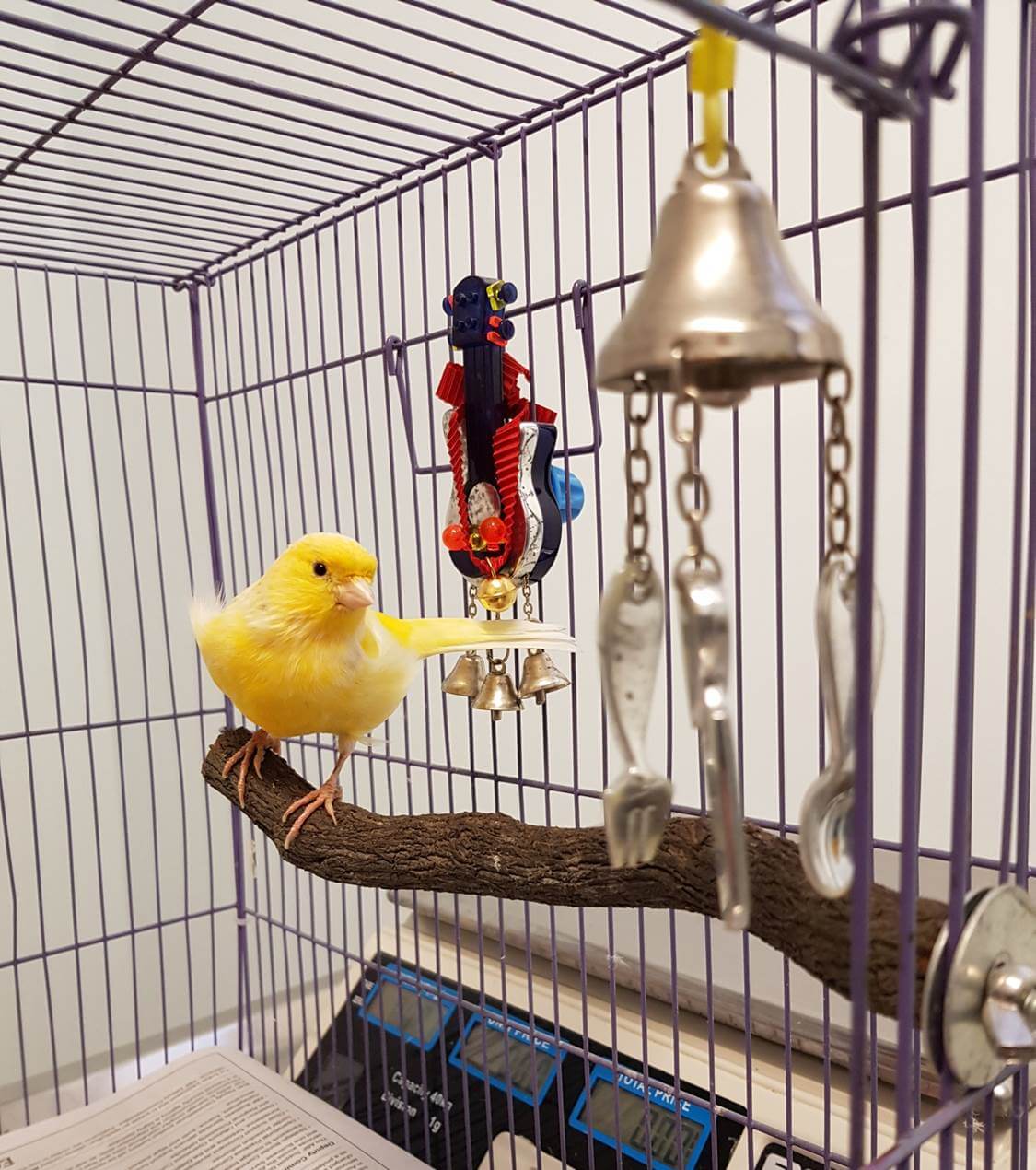
Larry on his favourite perch with his favourite Canary toys - visiting the
Vet for Canaries
ENVIRONMENTAL
Maidenhair fern (it’s within his territory so he sees it as fair
game) & it’s soil - he’s quite attracted to it &
regularly eats a little .- head bobbing from the edge of the pot or
sometimes he just jumps right in amongst it
and has a scratch around. I protect the base of the fern with a
‘collar’ cut from an old drink bottle to keep him
from eating the new shoots which he naturally prefers(!) - I am
happy to share the older growth as it doesn’t
jeopardise the plant.
NB I take care not to expose him to toxic house plants - please see
the internet for lists of safe & dangerous
species.
Flies, caterpillars and tiny insects in the pot plants- Larry’s an
enthusiastic and efficient bug catcher, getting
quite cross if one dares to invade his territory. Fly chasing is
usually accompanied by ferocious growls.
He also doesn’t mind the occasional lucky toast or biscuit crumb
from the kitchen floor.
BAMBOO SKEWERS for hanging corn etc.
I buy from Asian Grocery stores
Seeds and grains I buy loose in small quantities from Terra Madre in
High St Northcote - they have a fantastic
range of bulk foods - reliably fresh and inexpensive.
Diet - Canary Vets
- Give dark leafy green vegetables (spinach, silver beet, grated carrots, beans, peas, broccoli, seeding grasses, etc.) every day. Whatever is in season.
- Iceberg lettuce, cucumber and celery are not toxic but they lack vitamin A and trace elements that the preferred dark green and orange vegetables listed above contain.
- Along with the vegetables, feed a combination of formulated canary crumble and mixed seeds.
- Sprouted seeds is enjoyed as part of the diet.
- Small amounts of fruit may also be offered (e.g. apple, pear, orange) as can multi-grain bread, pasta, chicken bones or other meat or chopped hard-boiled egg.
- Avoid chocolate, caffeine, alcohol or avocado.
- For birds that are kept indoors a vitamin and mineral supplement may be recommended.
Common illnesses
(seen by our Canary vet)- Feather cysts. These are common and may need to be removed under anaesthesia.
- Tight leg -band in Canaries esp as they get older and the skin gets thicker.
- Respiratory infections.
- Scaly leg (caused by Knemidokoptes mange mites).
- Bacterial infections.
- Damage from fibres caught around toes.
- For birds that are kept indoors a vitamin and mineral supplement may be recommended.“Megabacteria’ caused by a yeast organism, Macrorhabdus ornithogaster.
- Coccidia and other parasites.
- So called ‘going light’ (chronic weight loss) can be caused by a number of different diseases, including bacterial infections, Macrorhabdus, coccidia and other parasites. Specific testing is required to determine the cause in an individual case.
Health Care from our expert Canary vets
- We recommend a health check (with testing as appropriate), when you acquire your new canary and each year thereafter, to ensure that care is optimal and to check for and prevent common illnesses.
- A good book is: Brats in Feathers, Keeping Canaries by R C 'Robirda' McDonald
- Respiratory infections.For beginners Talking Birds Avian newspaper August 2009 Edition pg 5 "A handy guide for beginners" by Jeff Leaney
Birds often hide signs of illness and may only appear unwell when they are very sick. It is important to seek advice early if your bird looks unwell.